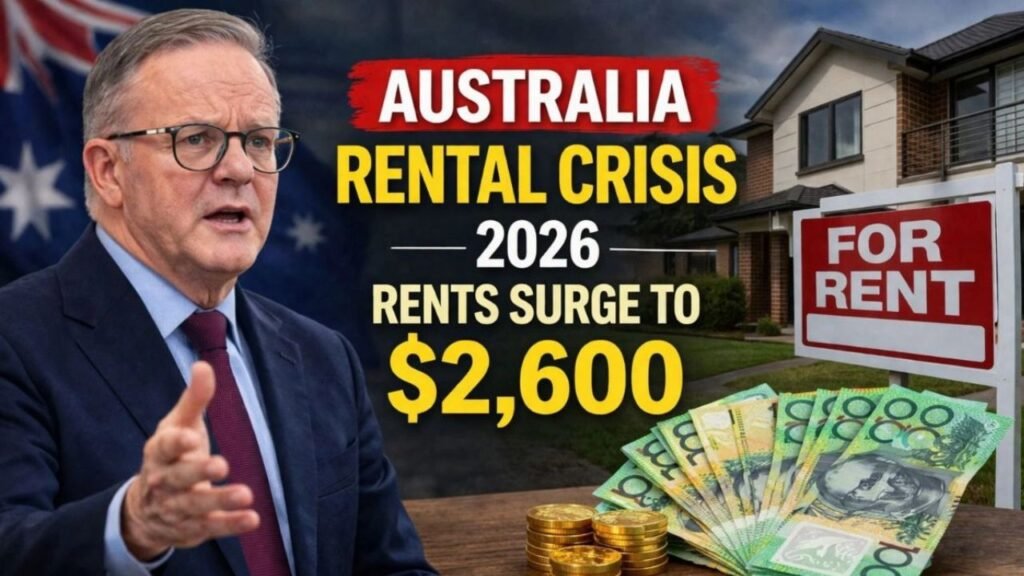
Australia’s rental market has reached a breaking point in 2026, with average rents in major cities climbing to around $2,600 per month. For many households, this sharp increase is no longer just a challenge—it’s a financial crisis.
From working families to young professionals, renters across the country are being forced to rethink how and where they live.
Why Are Rents Rising So Fast?
The surge in rental prices is driven by a mix of economic and structural factors.
Key Reasons Behind the Increase
- Severe housing shortages in cities and suburbs
- Population growth outpacing new housing supply
- Higher interest rates, increasing landlord costs
- Low vacancy rates, creating intense competition
- Limited long-term rental availability
When demand is far greater than supply, prices naturally rise—and that’s exactly what’s happening.
The Real Impact on Australian Families
Rising rents are putting serious pressure on household budgets.
What Families Are Experiencing
- Spending 30–45% of income on rent
- Cutting back on essentials like groceries and utilities
- Delaying major life decisions (buying a home, starting a family)
- Increased financial stress even for dual-income households
What Is Rental Stress?
Rental stress occurs when a household spends more than 30–35% of its income on rent, leaving less for other necessities.
Government Response: Is It Enough?
The government has introduced measures to address the crisis, but results are still limited.
Current Efforts
- Housing supply initiatives
- Planning and zoning reforms
- Rental assistance programs
The Challenge
Many experts believe these actions are too slow compared to how fast rents are rising. A growing number of Australians fall into a gap:
- Earn too much for assistance
- Still cannot afford market rents
A Long-Term Housing Problem
This is not just a short-term spike—it’s a deeper structural issue.
Underlying Causes
- Years of underbuilding homes
- Construction delays and labour shortages
- Rising migration and urbanisation
- Wage growth not keeping pace with rent increases
These factors suggest the crisis may continue unless major reforms are implemented.
How Australians Are Adapting
To cope with rising rents, many people are changing their lifestyles.
Common Strategies
- Moving to regional or smaller towns
- Downsizing to smaller homes or apartments
- Sharing housing with others
- Living in multi-generational households
- Considering relocation overseas
These changes highlight how serious the situation has become.
Rental Affordability: Then vs Now
| Aspect | Few Years Ago | 2026 स्थिति |
|---|---|---|
| Average Rent | Affordable | Around $2,600/month |
| Rent-to-Income | ~25% | 30–45% |
| Vacancy Rates | Moderate | Very low |
| Housing Stability | Stable | Uncertain |
What Renters Should Do Now
Navigating the current market requires planning and awareness.
Practical Tips
- Understand your rights regarding rent increases
- Plan lease renewals early
- Explore government support options
- Consider more affordable locations
- Budget carefully and track expenses
Being proactive can help reduce financial strain.
FAQs
1. Why are rents so high in Australia in 2026?
Due to housing shortages, high demand, rising interest rates, and limited supply.
2. What is considered rental stress?
When rent exceeds 30–35% of your household income.
3. Will rents go down soon?
There is no clear sign of immediate decline due to ongoing supply issues.
4. Can government assistance help?
It may help slightly, but many renters still struggle to afford market prices.
5. What are the best ways to cope with rising rent?
Consider relocating, sharing housing, or downsizing to reduce costs.
Final Thoughts
Australia’s rental crisis in 2026 reflects deeper issues in housing supply and affordability. With rents reaching $2,600 per month, even financially stable households are feeling the pressure.
Until supply increases and structural reforms take hold, renters will need to stay flexible, informed, and proactive. The decisions made today—where to live, how to budget, and when to move—are becoming more important than ever.